
Guide
Buying a used motorbike
Found a bike you like? Before you hand over money, check the paperwork and the history first, then the bike itself, and only then think about how you pay. None of it takes long, and it is the difference between a good buy and an expensive lesson. This guide walks through each step for a private sale in Australia, with the state rules that change what the seller has to give you. Dealer sales follow most of the same steps, with extra protection that we cover near the end.
Before you go and look
Start with the ad. A good private ad names the exact model and year. It shows the bike from both sides and gives the rego status. If the photos are cropped tight, the kilometres are missing or the price is far below similar bikes, ask why before you travel. You can compare asking prices against similar bikes in motorbikes for sale across Australia.
Ask the seller three questions by message so you have the answers in writing:
- Is the bike registered, and in whose name?
- Has it ever been written off or recorded as stolen?
- Is there any finance owing on it?
In Victoria a seller must tell you if a vehicle has been written off whether you ask or not, and the state suggests keeping a written record of the answer 5. Asking in writing is sensible everywhere else too.
If you are on your learner or provisional licence, check the exact model against your state's approved list before you look. A bike can be approved in its standard form and lose that status once modified, and our guide to LAMS approved bikes explains how each state handles it.
The history checks
Run a PPSR search
A PPSR search against the VIN shows whether a lender has a security interest recorded against the bike and usually shows written-off and stolen status as well 1. Run it on the day of the sale or the day before, because a clear search at that point is what protects you if a lender claims the bike later 1. Our PPSR check guide covers how to read the result.
Check the registration
Every state offers a registration check using the number plate. In New South Wales the free check shows the rego status and, where available, the last three odometer readings, and a paid report adds written-off and stolen history 2. In Victoria the free check shows the vehicle's classification, including whether it is recorded as a learner approved motorcycle 3.
Ask to see the seller's registration certificate and their licence. The name on the rego papers should match the person selling the bike, and the VIN on the papers should match the number stamped in the frame. If the bike is registered to someone else, find out why before going further.
Ask for the service history
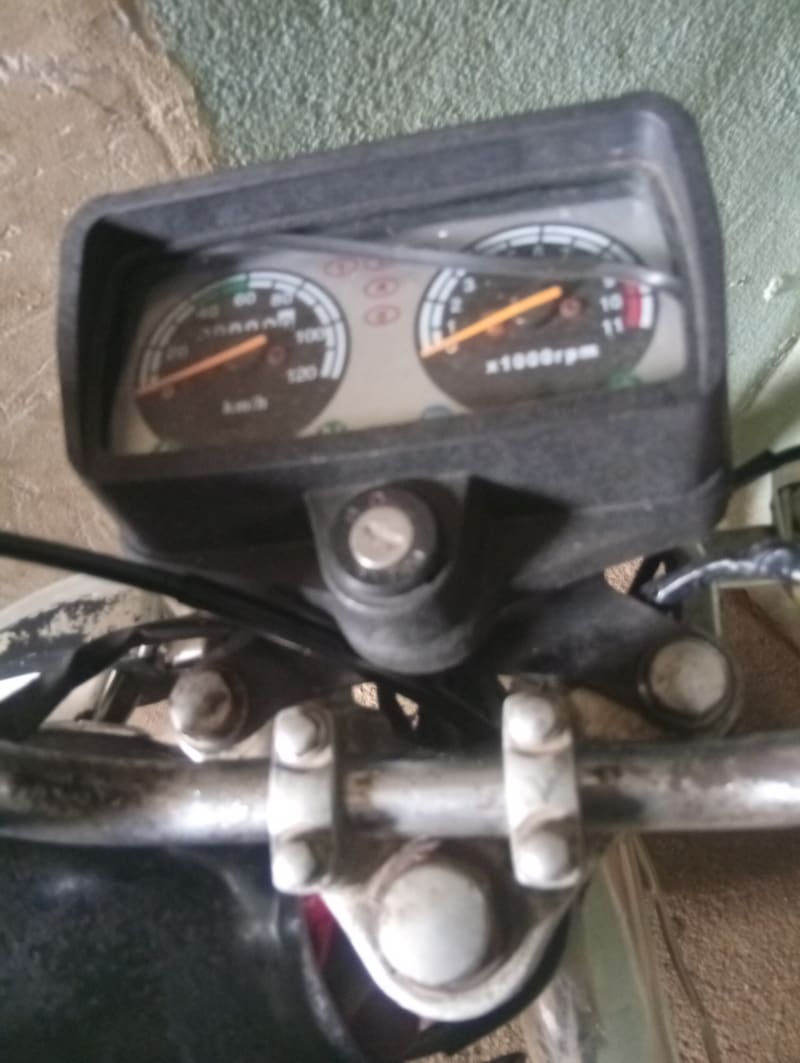
Service records do two jobs: they show the bike was looked after, and they give you a trail of odometer readings to compare with the dash. A PPSR search does not report the odometer 1, so your main cross-checks are the records and the state rego check. Receipts from a workshop carry more weight than a stamp book with no invoices behind it.
Inspecting the bike
Look at the bike cold. Ask the seller not to start or warm it up before you arrive, because a cold start tells you more about the engine and the battery than a warm one. Bring a torch and a rag, and look in daylight if you can.
Frame, forks and steering
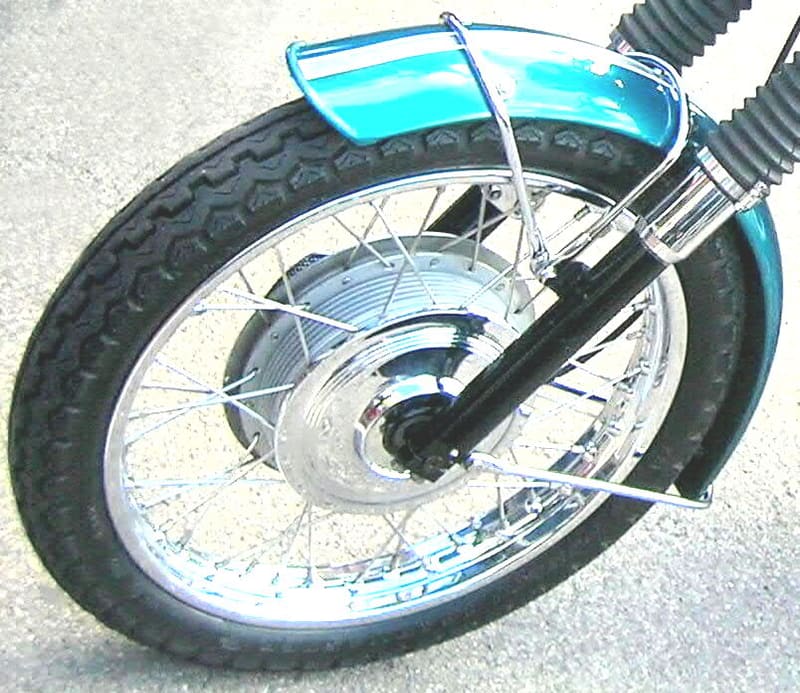
Look along the frame for cracks or welds, and for fresh paint that does not match the rest of the bike. Check the steering head for the stamped VIN and compare it with the papers. With the bike on its stand and the front wheel lifted, turn the bars from lock to lock. The movement should be smooth with no notch in the centre. Look at the fork legs for oil on the chrome, which points to worn seals.
Wheels, tyres and brakes
Spin each wheel and watch the rim for wobble. Look at the tyres for cracking or flat spots, and check the tread depth across the whole width. Squeeze the brake lever and press the pedal: both should feel firm, and the discs should be smooth with no deep grooves.
Chain, sprockets and final drive
On a chain-drive bike, pull the chain away from the back of the rear sprocket. If it lifts clear of the teeth, the chain is worn. Hooked or pointed sprocket teeth mean the sprockets need replacing with it. Belt and shaft drives need their own checks, so ask for the service history on those parts.
Engine, cooling and electrics
With the engine cold, check the oil level and colour, and look for leaks around the cases and the base of the cylinders. Start the bike and listen for knocks or rattles that change with the revs. On a liquid-cooled bike, check the coolant level and look for staining around the radiator. Test every light and the horn, and watch the dash for warning lights that stay on.
Signs of a crash
Signs the bike has been down include:
- scuffed bar ends or a bent lever
- scraped engine covers
- panels on one side that do not match the other
None of these is a reason to walk away on its own. They mean you should look harder at the frame and forks and ask directly whether it has been repaired after a crash. A bike that has been written off carries a permanent record; our guide to written-off bikes by state explains what that means.
The test ride
Only ride a bike you are licensed to ride, and only when the bike is registered and you have agreed with the seller who is responsible if something goes wrong. Many sellers will ask for the full price as security while you ride, or hold your licence and car keys instead, and that is reasonable.
On the ride, check that the clutch takes up smoothly, the gears select cleanly up and down, the bike tracks straight with your hands relaxed on the bars and the brakes pull it up without shudder. If you are not confident judging a bike, pay a mechanic for a pre-purchase inspection. Queensland's own guidance notes that a safety certificate inspection is not a full mechanical inspection and suggests a motoring group for that 6.
Roadworthy and safety certificates
What the seller must hand over depends on the state the bike is registered in:
- Queensland: the seller must give you a current safety certificate when the registration is transferred, and can be fined over $700 for failing to do so 6. A private seller's certificate is valid for two months or 2,000 kilometres, whichever comes first 6.
- Victoria: you need a roadworthy certificate to transfer the registration, and it stays current for 30 days from issue 3. Victoria says plainly that a roadworthy shows the bike is safe to ride now, not that it is mechanically reliable 4.
- The ACT: a registered vehicle more than six years old needs a roadworthy inspection before the buyer can transfer the registration 8.
The other states and territories set their own rules for inspections. Our rego transfer guide by state lists what each one asks for.
Paying for the bike
Agree the price and then write a receipt signed by both of you. It should show:
- both names
- the date and the price
- the plate number and the VIN
Keep a copy each.
Pay in a way that leaves a record, and only once the bike and its papers are in front of you. Scamwatch warns against paying for expensive items before you have inspected them in person and against paying when the account holder does not match the person you think you are paying 10. A seller who pushes for a deposit on a bike you have not seen, or who wants payment split across several accounts, is a seller to walk away from. Our safety tips for buying and selling cover the common tricks in more detail.
If you need finance, sort out pre-approval before you start negotiating so you know your limit. Our motorbike loan repayment calculator gives a rough idea of repayments.
After you buy
Transfer the registration into your name quickly. In New South Wales and the ACT the buyer has 14 days, and a late transfer attracts a fee 28. Victoria and Queensland also give buyers 14 days to finish the transfer 37.
Arrange insurance before you ride the bike home, and keep the receipt, the PPSR certificate and the roadworthy or safety certificate together with the rego papers. If anything is disputed later, that bundle is your record of what you bought and when.
Buying from a dealer instead
A licensed dealer takes on duties a private seller does not. When you buy from a licensed motor dealer you generally take the bike free of any security interest registered against it 1, and the consumer guarantees under the Australian Consumer Law apply to a business that sells goods, which most do not in a one-off private sale 9. Dealer ads on Bike Domain carry the dealer's licence details in the form each state requires.
For more on picking the right model before you start looking, read our post on choosing the right second hand motorbike.
Frequently asked questions
What should I check first on a used motorbike?
Check the paperwork before the bike. Match the name on the rego papers to the seller's licence and the VIN on the papers to the frame, then run a PPSR search on the VIN. If any of that does not line up, there is no point inspecting the engine.
Do private sales come with a warranty?
Not in the way dealer sales do. Most consumer guarantees do not apply to one-off sales between two people, although the guarantees of title and undisturbed possession still apply, along with the guarantee of no hidden debts (ACCC). That is why the inspection and the PPSR search matter more in a private sale.
Who gets the roadworthy when I buy a bike?
It depends on the state. In Queensland the seller must give you a current safety certificate, and in Victoria you need a roadworthy certificate to transfer the registration (Transport Victoria). Check your own state's rules in our rego transfer guide.
Is a roadworthy the same as a mechanical inspection?
No. A roadworthy or safety certificate checks that the bike meets basic safety standards on the day. Victoria notes that a roadworthy does not mean the bike is mechanically reliable or free of wear (Transport Victoria). Pay for a separate pre-purchase inspection if you want an opinion on condition.
How do I avoid a scam when buying a bike online?
See the bike in person before you pay anything, at an address you can check, and pay the person named on the rego papers. Scamwatch warns about deposits for items you have not inspected and payments to accounts that do not match the seller (Scamwatch).
Can I buy a bike with no rego?
Yes. An unregistered bike can still be bought and sold, but it has to be registered before you ride it on the road, and moving it on the road beforehand needs a permit in most states. An unregistered bike needs the same PPSR search and frame number check as any other.
Sources
Government and regulators
- Personal Property Securities Register, Do a used car or vehicle search, accessed 26 Sep 2026 (read from the Internet Archive capture of 19 April 2026, because the register's site did not answer from our network)
- Service NSW, Buying a vehicle, accessed 26 Sep 2026
- VicRoads, Buy and transfer a vehicle, accessed 26 Sep 2026
- Transport Victoria, Roadworthy certificate, accessed 26 Sep 2026
- Transport Victoria, Buying a written off vehicle, accessed 26 Sep 2026
- Queensland Government, Safety certificates, accessed 26 Sep 2026
- Queensland Government, Registration transfer, accessed 26 Sep 2026
- Access Canberra, Buying an ACT registered vehicle, accessed 26 Sep 2026
- ACCC, Consumer rights and guarantees, accessed 26 Sep 2026
- Scamwatch (National Anti-Scam Centre), Buying or selling scams, accessed 26 Sep 2026
Last reviewed 26 Sep 2026 by Bike Domain. State rules and fees on this page are re-checked against the linked pages every quarter; where a linked page differs from this summary, the linked page is authoritative.